



Why Is My Hair Falling Out? Understanding the Early Signs of Scalp Stress
Not all hair fall is hair loss.
Finding more hair on your brush or in the shower can be worrying. It's often one of the first signs that something has changed, but it doesn't always tell the full story.
Hair fall can happen for many reasons, and not every case points to long-term hair loss. Sometimes, it's your scalp’s way of signaling that something is out of balance, and with the right care, it can improve.
Just like the skin on your face, your scalp is a living ecosystem. It needs the right balance of hydration, nourishment, and care to create the ideal environment for healthy hair growth that starts from the roots.
When that balance is disrupted, your scalp may begin showing subtle signs of stress long before noticeable hair thinning occurs.
Understanding these early signals is the first step towards giving your hair the care it needs.
Hair Fall vs. Hair Loss: What's the Difference?
 One of the biggest misconceptions is that hair fall, and hair loss mean the same thing.
Hair fall refers to the natural shedding of hair as part of the hair growth cycle. We all shed hair every day. However, if you notice more hair than usual, persistent shedding, or changes in your hair's thickness or volume, it could be a sign that your scalp or hair growth cycle has been affected.
Hair loss, on the other hand, describes a gradual reduction in hair density and anchorage over time. It may develop for different reasons, including hormonal changes, genetics, stress, or scalp conditions.
The challenge is that many of these concerns can look similar in the beginning.
That's why understanding the condition of your scalp is often more important than focusing on the hair fall alone.
Common Causes of Scalp Stress
 A healthy scalp is the foundation for healthy-looking hair.
When your scalp becomes stressed, it can affect the environment where every strand grows. While everyone's scalp is different, some of the most common contributors include:
Stress — Periods of emotional or physical stress can interrupt the natural hair growth cycle, contributing to stress hair loss or increased shedding.
Hormonal Changes — Hormonal fluctuations affect both hair loss in women and men.
Women may notice changes during postpartum recovery or menopause, making concerns such as hair loss after pregnancy and finding an effective postpartum hair loss treatment increasingly common.
Men, meanwhile, often experience gradual hair thinning, particularly around the temples or crown.
Daily Habits — Frequent heat styling, colouring, chemical treatments, and harsh cleansing products may weaken the scalp's protective barrier over time, making hair appear more fragile.
What Are the First Signs of Hair Loss?
 Hair fall is often the sign we notice, but it's rarely the only one.
Your scalp may begin showing subtle changes long before you notice visible thinning.
Look out for signs such as:
-
An unusually oily or dry scalp
-
Persistent scalp tension, tightness or discomfort
-
Increased sensitivity while brushing or washing
-
Hair that looks flatter or lacks volume at the roots
-
More broken or shorter strands than usual
-
Gradual hair thinning, especially around your parting or crown
These changes are your scalp's way of telling you that something may be out of balance.
A Simple 3-Step Scalp Care Routine
Once you understand your scalp's needs, building an effective routine becomes much easier.
Step 1: Cleanse
Start with the best shampoo for thinning hair, one that gently removes impurities while helping maintain your scalp's natural balance.
Our Volume & Strength Shampoo is enriched with rosemary from Provence, five essential oils, and plant-derived keratin to strengthen fragile hair while adding visible volume.
Bonus Tip: If your scalp gets extra oily, start with our Micellar Pre-Shampoo before cleansing. It helps lift excess oil, impurities, and product build-up, boosting the cleansing power of your shampoo while staying gentle on the scalp.
Step 2: Nourish
Healthy-looking hair also needs hydration.
Followed with our Volume & Strength Conditioner helps replenish moisture, improve manageability, and strengthen each strand without weighing hair down, leaving hair feeling softer, fuller, and more resilient.
Step 3: Treat
Complete your routine with a targeted scalp treatment.
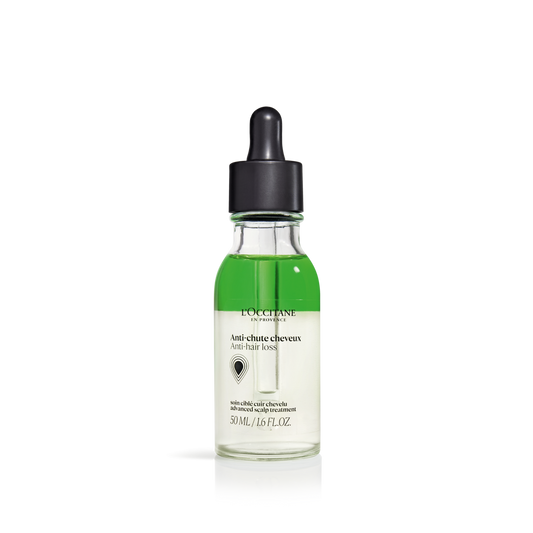
Our Anti-Hair Loss Treatment is formulated with 97% natural-origin ingredients, including rosemary essential oil and botanical extracts, to help support the scalp and reinforce hair from the roots.
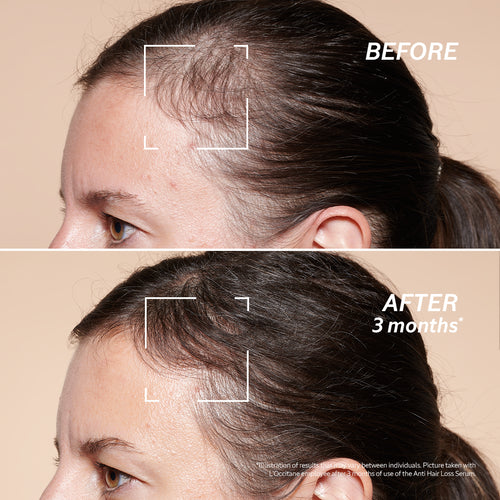
Its lightweight bi-phase serum works on the hair life cycle to help reduce visible hair fall, improve hair anchorage, and promote stronger, fuller-looking hair. With consistent use, hair appears revitalised, while the scalp looks less visible as hair density improves.
 Proven results: After 28 days, scalp appears stimulated, hair looks revitalised, and less hair remains on the brush after brushing. After 90 days, significant decrease in hair loss and +47% improvement in hair anchorage.
Start With Understanding Your Scalp with a Hair Diagnosis
Because every scalp is unique, there isn't a single answer to "Why is my hair falling out?"
The same symptom can have different underlying causes, which is why understanding your scalp is the most important first step.
Visit your nearest L'Occitane en Provence boutique for a complimentary Hair Diagnosis, where our Beauty Hosts use specialised equipment to assess your scalp and identify concerns you may not be able to see yourself.
Based on your results, they'll recommend a personalised routine tailored to your scalp's needs.
If you'd like to get started from home, you can also take our online Hair Quiz for personalised recommendations before visiting us in our boutiques.
FAQ
Why is my hair falling out?
Hair fall can be influenced by many factors, including stress, hormonal changes, styling habits, genetics, and scalp condition. The best way to understand what's causing your concern is through a professional Hair Diagnosis.
What are the first signs of hair loss?
Early signs of hair loss may include increased shedding, gradual hair thinning, reduced volume, persistent scalp tension, sensitivity, or changes in your scalp's condition. These can appear before more noticeable changes in hair density.
Can scalp health affect hair growth?
Yes. A healthy scalp provides the right environment for healthy-looking hair to grow. When the scalp becomes stressed or unbalanced, it can affect the hair growth cycle and overall hair vitality.
How do I know if my scalp is unhealthy?
Signs can include excessive oiliness or dryness, scalp tension, sensitivity, itchiness, flakes, or increased hair shedding. A Hair Diagnosis can help identify your scalp's specific needs and recommend the right routine.
What is the best scalp care routine for thinning hair?
The best scalp care routine for thinning hair starts with understanding your scalp's condition. A simple routine includes cleansing with a suitable shampoo, nourishing with a lightweight conditioner, and using a targeted scalp treatment. For personalised advice, visit our boutiques for a complimentary Hair Diagnosis or take our online Hair Quiz.